Incoterms with Turkish suppliers and how to choose the right rule
When choosing Incoterms with Turkish suppliers, match the delivery rule to where goods are delivered, who handles customs formalities and when transport risk passes. State the three-letter rule, the precise named place or port and “Incoterms 2020” in the quotation and sales contract.
ArdimexPublished 6 min read

The International Chamber of Commerce (ICC) publishes the Incoterms® rules to allocate delivery tasks, costs and risk. They do not determine ownership, the purchase price, payment terms, product specifications or remedies for breach of contract.
Choosing Incoterms with Turkish suppliers begins with a precise named place
“FCA Turkey” or “CIF destination” is too vague. Specify the factory, carrier handover point, shipment port or destination address, including the exact point within a terminal when relevant. For a factory collection, write FCA followed by the full agreed factory address and Incoterms 2020.
Under FCA, the named place identifies where delivery occurs. Under CIF, it names the destination port for paid freight and insurance; risk passes earlier, when goods are loaded on board at the shipment port.
Compare Incoterms with Turkish suppliers by the delivery event as well as the named place, not just the seller’s freight bill.
All eleven Incoterms 2020 rules belong to two transport groups
Seven rules work with any mode of transport, including combinations of road, sea and air: EXW (Ex Works) makes the goods available to the buyer; FCA (Free Carrier) delivers to the buyer’s nominated carrier; CPT (Carriage Paid To) includes carriage to a destination; CIP (Carriage and Insurance Paid To) adds insurance; DAP (Delivered at Place) brings the goods to a destination ready for unloading; DPU (Delivered at Place Unloaded) includes unloading before risk passes; and DDP (Delivered Duty Paid) adds import clearance and applicable import duties and taxes.
Four rules are for sea or inland waterway transport: FAS (Free Alongside Ship) delivers alongside a vessel; FOB (Free On Board) delivers on board; CFR (Cost and Freight) adds freight to the named destination port; and CIF (Cost Insurance and Freight) adds insurance to that freight arrangement. Under CFR and CIF, risk still passes when the goods are on board at the port of shipment.
The six rules below are selected for practical comparison, not ranked by usage.
Compare six delivery rules by the point where risk transfers
| Rule | Where delivery and risk transfer happen | Export clearance | Import clearance |
|---|---|---|---|
| EXW | Goods made available at the named place before loading | Buyer | Buyer |
| FCA | At seller’s premises when loaded onto collecting vehicle; elsewhere when ready for unloading from seller’s vehicle and at the carrier’s disposal | Seller | Buyer |
| FOB | Goods on board the vessel at the port of shipment | Seller | Buyer |
| CIF | Goods on board the vessel at the port of shipment; named destination port is for freight and insurance | Seller | Buyer |
| DAP | Goods at buyer’s disposal on arriving transport ready for unloading at named destination | Seller | Buyer |
| DDP | Import-cleared goods at buyer’s disposal on arriving transport ready for unloading at named destination | Seller | Seller |
The table allocates standard responsibilities; it cannot establish whether a particular supplier can legally handle import formalities.
EXW or FCA changes the factory collection and export responsibilities
Under EXW, the manufacturer makes goods available without having to load the collecting vehicle. The buyer arranges loading, transport and Turkish export clearance, which can be difficult for an overseas importer.
Under FCA at the factory, the seller loads the collecting vehicle and handles export clearance. At another named location, delivery occurs when the seller’s vehicle arrives and the goods are at the nominated carrier’s disposal, ready for unloading. FCA does not automatically mean factory delivery.
When choosing EXW or FCA, confirm who loads, declares the export and provides transport documents before appointing a carrier.
FOB and CIF transfer risk at the shipment port
Under FOB, delivery and risk transfer occur when goods are on board at the named shipment port.
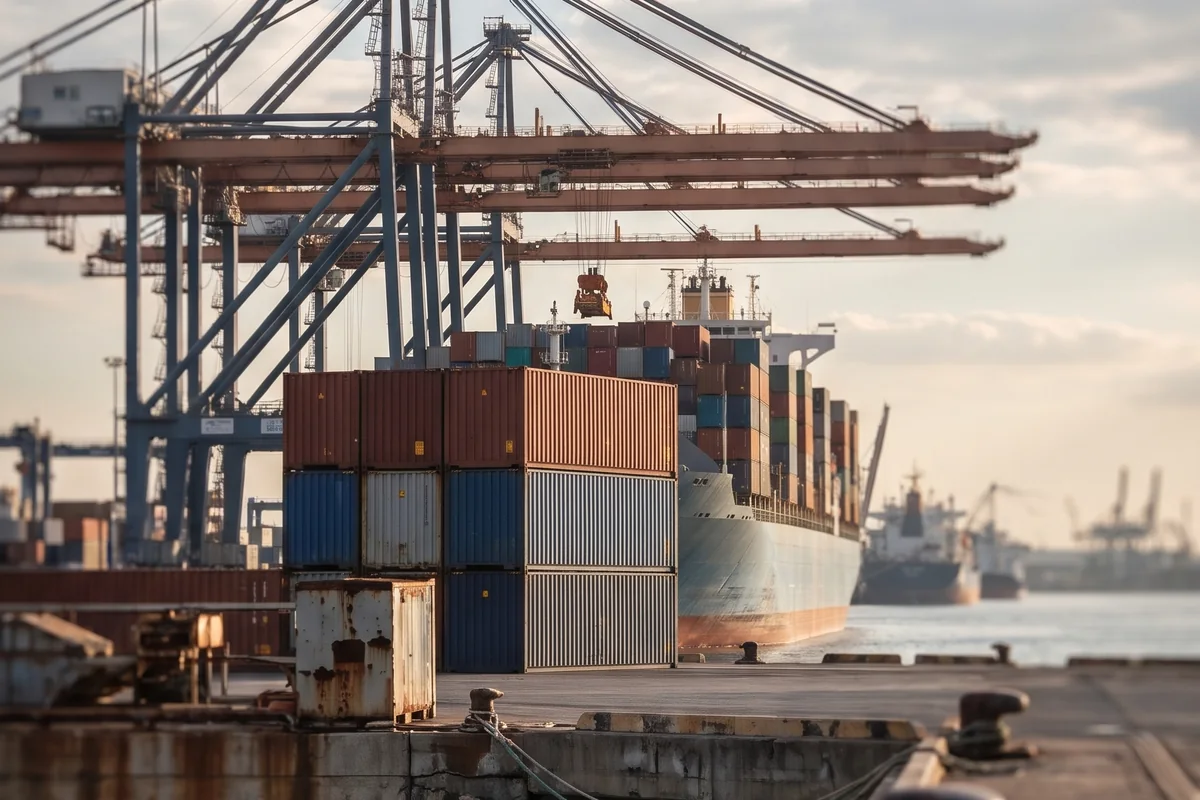
Containers may pass to a carrier at a terminal before loading on board, leaving a gap between handover and FOB risk transfer. FOB is not prohibited for containers; compare FCA when handover occurs earlier.
“FOB Turkey” still needs a shipment port. Under CIF, the seller pays freight and required insurance to a named destination port, but risk passes on board at the port of shipment.
For Incoterms with Turkish suppliers involving containers, identify the actual carrier handover. Check the insurance cover: CIP requires higher default cover than CIF under Incoterms 2020; other rules do not generally obligate the seller to insure cargo.
DAP and DDP keep transit risk with the seller until destination
Under DAP, the seller bears risk until goods arrive at the named destination ready for unloading. The buyer handles import clearance, duties and taxes; the seller need not unload.

DDP has a similar risk point, but the seller handles import clearance, duties and taxes. Check whether your Turkish supplier can legally complete those procedures in your country.
If the seller must unload, examine DPU instead; the buyer still handles import clearance.
Compare Incoterms with Turkish suppliers on one quotation basis
Ask manufacturers for the rule, full named place, included transport charges, required insurance and available documents. An EXW price and a CIF price do not represent equivalent costs or risks.
Request quotes using the same rule and place, and check collection, terminal handling, carriage, clearance and destination charges. For the broader process, see how to import from Turkey and shipping from Turkey.
The right rule depends on your carrier and customs arrangements, not a universal ranking of trade terms. If you are still identifying manufacturers, our guide to sourcing from Turkey covers that earlier step.
How Ardimex can help
We search for Turkish manufacturers against your brief, contact them in Turkish and record responses and open questions in a written report. See our manufacturer sourcing service if you need supplier contacts; we are not a freight forwarder or lawyer.
Frequently asked questions
What is the difference between EXW and FCA?
EXW generally leaves collection, loading and Turkish export clearance with the buyer. Under FCA, the seller handles export clearance, and loading obligations depend on whether delivery takes place at the seller’s premises or another named location.
Is FOB suitable for container shipments?
FOB is not prohibited for containers, but it can be awkward when the carrier takes possession at a terminal before the container is loaded on board. Compare FCA if that is how the goods will be handed over.
Who pays customs duties under DDP?
Under DDP, the seller is responsible for import clearance and applicable duties and taxes. Confirm that the supplier can actually fulfil those obligations in your destination country.
Do Incoterms transfer ownership of goods?
No. Incoterms allocate delivery, costs and risk, not legal ownership; the sales contract must address when title passes.
Which Incoterms version should I use in 2026?
Specify Incoterms 2020, the current published edition, alongside the rule and named place. An omitted year can leave the parties uncertain about which edition governs their agreement.
What does named place mean in Incoterms?
It is the stated location or port linked to the chosen rule, with a precise delivery point where needed. In CIF it names the destination for paid freight and insurance; in FCA or DAP it helps define where delivery and risk transfer occur.