Articles
Turkish food suppliers and documents to request
Before buying from Turkish food suppliers, request a product specification, ingredient and allergen details, shelf-life and storage information, and clear lot-traceability records. Check which commercial, origin and official documents your destination requires.
ArdimexPublished 6 min read
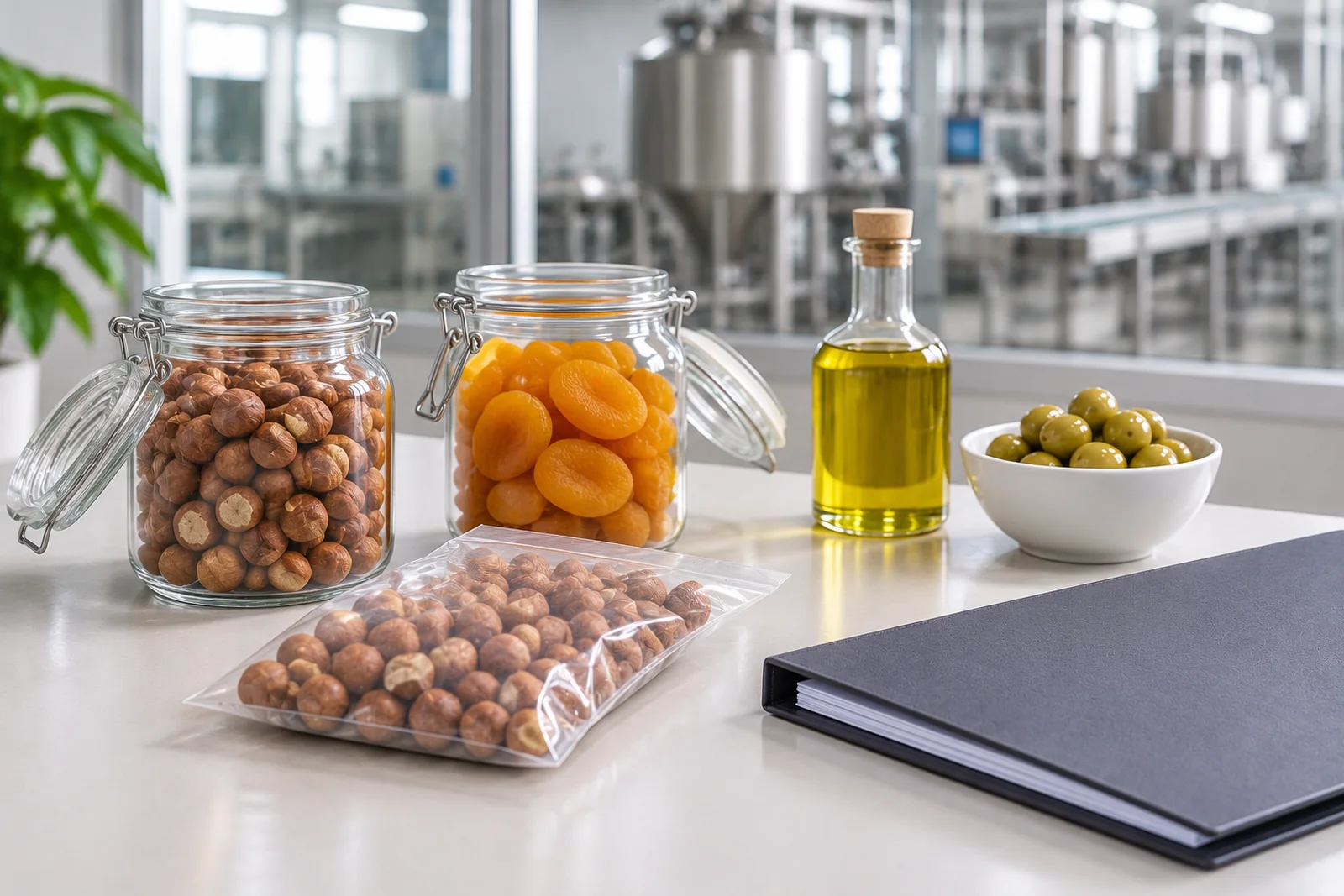
Agree on any certificate of analysis needed for the eventual shipment. A supplier’s export file does not replace the importer’s own checks. Separate information used to assess food from paperwork needed to import it.
Ask Turkish food suppliers for product details before discussing an order
Start with the exact food. A specification identifies its characteristics and packaging. If the seller is a trader, ask who manufactures the food and who will export it.

For food suppliers in Turkey, request the details your purchasing and labelling teams need:
- Product name, variety or grade, ingredients and relevant processing details
- Allergen information and nutrition data where needed for the destination label
- Packaging format, unit weight and whether the goods are bulk or retail packed
- Shelf life, date marking, storage conditions and transport requirements
- Lot codes and records that allow a batch to be traced to production
Distinguish existing products from proposed private-label versions; changes require updated records.
Build a document file with the correct issuer for every item
Food import documents come from several parties. Turkish food suppliers can assemble the file, but carriers and authorities issue some records. This is a request guide, not a mandatory certificate list.
| Document | Usually issued or provided by | Why the buyer needs it |
|---|---|---|
| Product specification | Manufacturer or supplier | Identifies the product and packaging offered |
| Ingredients and allergen data | Manufacturer or supplier | Supports assessment and destination labelling |
| Certificate of analysis for a lot | Testing laboratory or responsible producer, supplied through seller | Links test findings to identifiable goods |
| Proforma invoice | Seller or exporter | Sets out proposed goods and commercial terms |
| Commercial invoice and packing list | Seller or exporter | Reconciles the sale and shipment contents |
| Bill of lading or air waybill | Carrier or authorised agent | Documents the transport consignment |
| Certificate of origin | Authorised issuing body, arranged by exporter | Records declared origin when required |
| Preferential origin proof if applicable | Exporter or authorised body under applicable rules | Supports a preference claim where permitted |
| Official health or phytosanitary certificate if required | Competent exporting-country authority | Provides the required official evidence |
| Destination import filings | Importer or legally responsible filing party | Meets applicable entry and notification obligations |
Before shipment, compare product descriptions, quantities, lot references and party names across the records.
Ask Turkish food suppliers to match test results to the shipped lot
A certificate of analysis reports findings for an identified sample or production lot. A product specification instead describes what the food is intended to meet. Neither automatically proves compliance with the importing country’s rules.
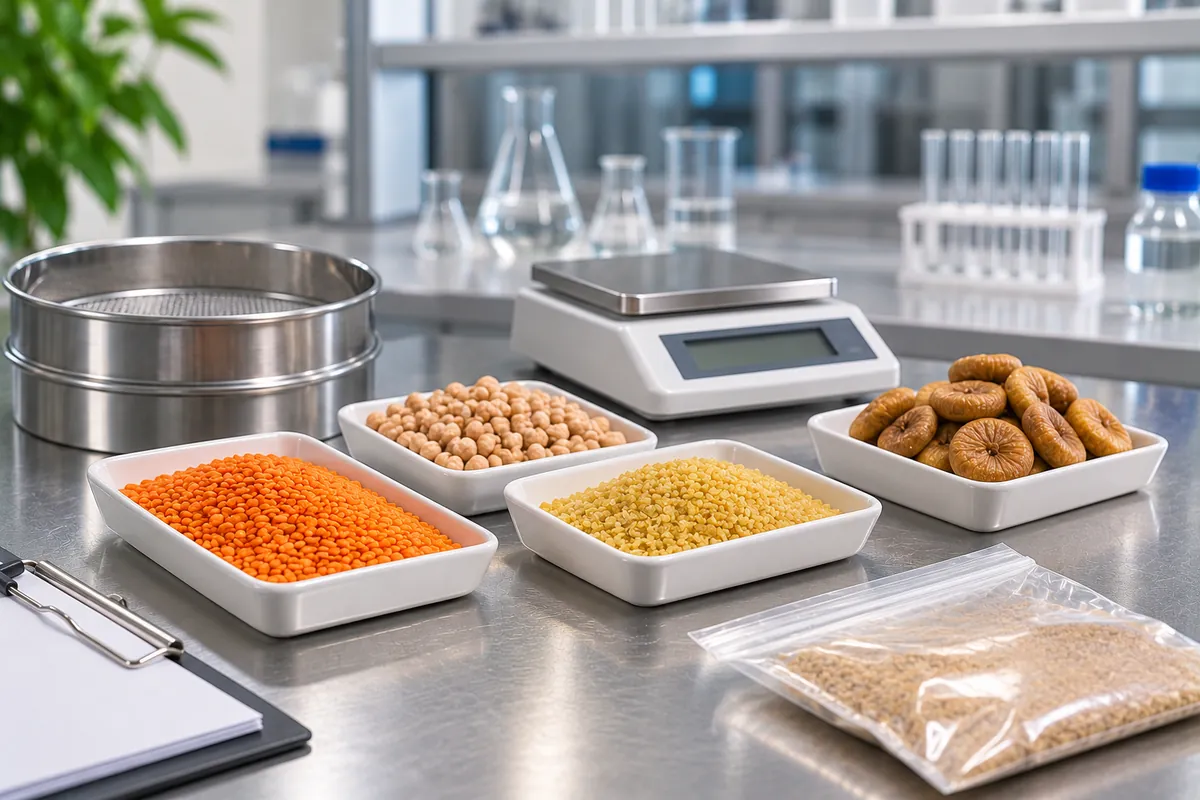
Check the evidence before accepting it:
- Does the report identify the product and lot clearly?
- Who tested it, what was tested and when?
- Do the findings relate to the goods being shipped rather than an unrelated example?
Relevant tests depend on the food and destination. If an order spans several lots, ask how each lot connects to the supporting records. A laboratory report is not a substitute for an official certificate when one is required.
Check origin papers without treating them as food safety approvals
A certificate of origin records declared origin, not food safety. Preferential origin proof serves a different purpose and applies only where the trade arrangement and its rules permit a preference.
Ask which origin documents the exporter can arrange and confirm the appropriate form with your customs adviser. Dispatching goods from Türkiye does not by itself establish their qualifying origin.
Confirm official certificates for the exact product and destination
Some foods need an official health certificate, and certain plant products fall under phytosanitary requirements. Neither document is automatically required for every food exported from Türkiye.
The competent Turkish authority issues or endorses applicable export certificates. Check requirements with the destination authority before ordering or approving documents.
Check destination rules rather than relying on an export checklist
For the United States, the U.S. Food and Drug Administration (FDA) explains facility registration and prior notice in its Importing Human Foods guidance. Registration applies to covered food facilities, including applicable foreign manufacturing, processing, packing or holding facilities, not automatically to every importer.
Prior notice is a separate requirement for imported food.
The FDA’s Foreign Supplier Verification Programs (FSVP) framework also establishes duties for covered U.S. importers, subject to exemptions and modified requirements. Verify which party has those responsibilities; a supplier’s facility registration is not proof that the importer’s duties are complete.
For the EU, the European Commission’s Access2Markets guidance distinguishes food and plant or animal health requirements. The European Commission’s official controls guidance explains that certain foods of non-animal origin face increased import checks.
Requirements depend on the product, origin and applicable current rules, not a generic certificate list.
Outside those markets, ask your own food and customs authorities to confirm the necessary registrations, notifications and product-specific documents before committing to Turkish food suppliers.
Prepare the destination label using verified supplier information
A Turkish retail label is not automatically suitable for another market. Importers and brand owners must establish local rules on language, ingredients, allergens, nutrition, origin and date marking, with legal responsibility depending on the destination.
Obtain accurate source information before translating or designing packaging. For private-label goods, confirm the final recipe and packaging, not just an early sample.
Use the document checklist to resolve open questions before payment
Before ordering, identify what is final, what follows production and who handles each step:
- Which specification and label information are approved for production?
- Which test results will identify the shipped lot?
- Who obtains origin, transport and any official certificates?
- Who checks destination registrations, entry filings and labelling?
- Do lot codes on the goods match the commercial paperwork?
These answers help compare Turkish food suppliers on something more useful than price alone. Our guide to sourcing from Turkey covers finding candidates; our guide to importing from Turkey covers the wider import process.
How Ardimex can help
We research and contact Turkish manufacturers against your food product brief, then record their replies and open questions in a written report. For that initial outreach, see our food manufacturers in Turkey service, or email contact@ardimex.com to get a quote.
Frequently asked questions
What documents are required to import food?
Requirements depend on the food and destination. Obtain commercial and product records; confirm origin evidence, official certificates and importer filings with the relevant authorities.
Does food from Turkey need a health certificate?
Not every food from Türkiye needs one. The requirement depends on the product and destination, so check the relevant authority before ordering from Turkish food suppliers.
What is a certificate of analysis?
A certificate of analysis reports test findings for an identified sample or lot. Confirm which lot was tested and whether it corresponds to the goods supplied.
Who is responsible for food labelling when importing?
Importers and brand owners often have responsibility for meeting destination labelling rules, although the exact allocation varies. Ask manufacturers for accurate ingredient, allergen and nutrition information before finalising the label.
Do I need FDA registration to import food from Turkey to the US?
FDA food facility registration concerns facilities covered by the rule, not every importer. Prior notice and FSVP obligations are separate and apply according to their respective requirements.
What is a certificate of origin used for?
It records the declared origin of goods for trade and customs purposes, not food safety. Preferential treatment may require a different form of origin evidence.