Private label clothing in Turkey from factory brief to sample
Private label clothing in Turkey starts with a product brief, not a logo file. Overseas brands need to explain the garment, fit, materials, branding and approval process before a factory can judge whether the project suits its capabilities. This guide shows how to prepare the first enquiry, read factory responses and choose the evidence needed before agreeing to production.
ArdimexPublished 5 min read
Define the product and the production model
Write down whether you want an existing style adapted to your label or a garment developed from your own design. These are different manufacturing questions. A factory that handles a standard T-shirt with a custom print may not be the right partner for tailored outerwear with a new pattern, and a business that sells ready-made stock may not provide development services.
Describe the target customer, intended use and sales market. Add reference images or sketches, but do not rely on images alone. Specify the garment category, construction details, intended silhouette, fastening, pockets, trims and decoration. Explain what may change during development and what must be preserved. Give each design a style code and revision so a sample or quoted cost can be traced to the version approved.
Decide who provides patterns and technical specifications. If you have only a concept, ask the candidate factory whether development, pattern making, grading and sample revisions are offered and how those tasks are agreed. Do not assume that “private label” includes original design, fabric development, bulk manufacture, packaging and export handling in one unpriced package.
Specify fabric, fit and branding in writing
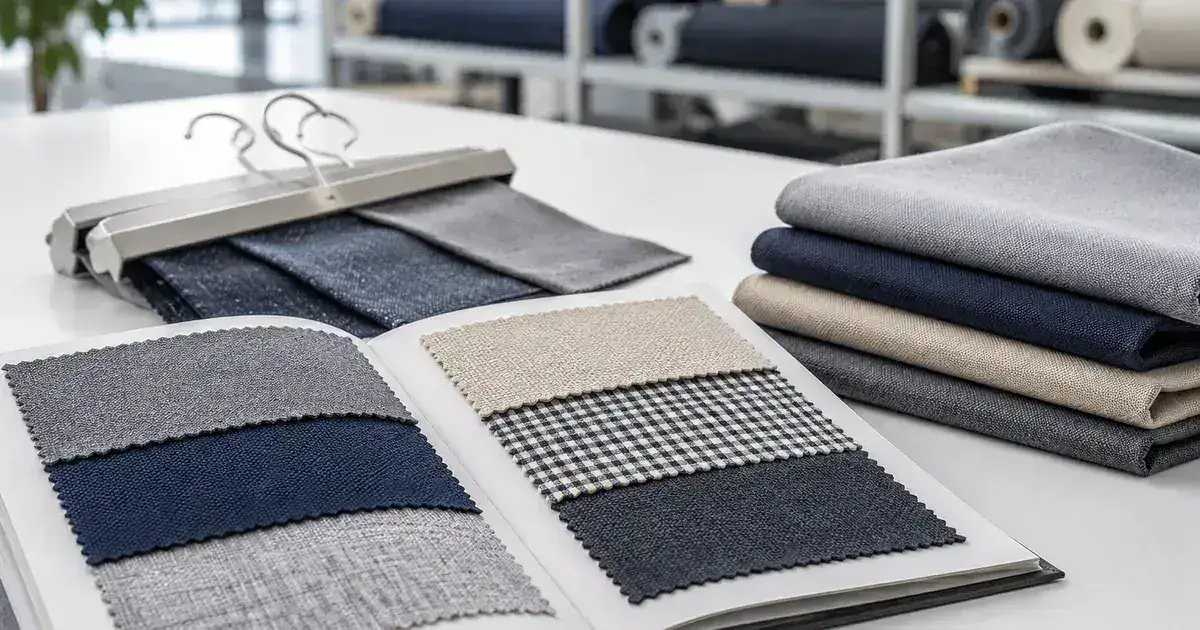
A useful clothing specification includes fibre composition or target performance, fabric construction, weight if relevant, colour reference, washing expectations and any treatment or finish. Where substitutions are possible, define the approval rule. A description such as “soft premium cotton” is not a measurable purchase specification. If the project requires a particular fabric source or independently verified claim, ask what evidence would support it.
Give size charts and measurement points instead of relying on broad labels such as small or large. Define how tolerances and fit comments will be handled. Clarify labels, artwork, print or embroidery locations, tags, folding and packaging, and provide production-ready files only after determining responsibility for artwork control. A visually convincing mock-up is not evidence that the resulting garment will fit, wash or perform as intended.
Compliance should be checked for the destination and the actual product, particularly when a claim, label or chemical requirement may apply. Do not request an impressive list of unrelated certificates. Seek the documentation relevant to the specified fabric, process and sales market, and verify scope with the issuer or an appropriate specialist.
Use samples to settle questions before bulk approval
Ask what type of sample the manufacturer proposes and which aspects it is meant to demonstrate. An early development sample may test construction or fit, while a later approval sample should reflect agreed materials, trims and details. Record who supplies each component, how revisions are requested and when a sample becomes the accepted reference. The label “approved” is ambiguous unless the approved style and revision are identified.
Evaluate samples against a written checklist: appearance, measurements, stitching, finishing, labels and any applicable performance tests. Test results should be assessed against the intended use, not treated as decoration in a sales deck. Photograph findings and return precise comments rather than requesting that a garment simply “look more premium.” Agree how differences between the reference sample and production goods will be assessed.
Compare factories by capability and scope
Turkey has an established apparel sector. The Istanbul Apparel Exporters’ Association represents ready-to-wear exporters and describes sector activities including research, trade events and buyer connections. Sector presence is useful context, not evidence that any particular business can make your garment.
Ask each candidate whether the requested garment type is within its normal work, what steps are done in-house, what is subcontracted and who remains responsible for quality and order communication. Request comparable examples where appropriate, without assuming that images establish ownership of the goods. Make the company explain how it will handle materials sourcing, sample rounds, bulk production, finishing and packing.
Minimum order quantities, material constraints, sample charges and lead times must be requested for your exact style and agreed with the factory. Do not transfer an advertised minimum from one garment or fabric to another. Record quotation exclusions and the assumptions that might change the price, especially custom dyeing, accessories, pattern work, testing or unusual packing.
Complete a private-label factory comparison sheet
Send the same version of your brief to each factory. Then create a comparison row with the following fields, recording unanswered questions rather than estimating the factory’s answer.
- Style: code, revision, garment type and target market.
- Materials: fabric composition, colour, trims, decoration and accepted alternatives.
- Fit: measurement chart, tolerance questions, pattern and grading responsibilities.
- Sampling: sample type, revision count, approvals and quoted sample charges.
- Production: in-house and subcontracted stages, quantity basis, proposed timing and constraints.
- Commercial: quoted inclusions, exclusions, delivery point, payment stages and document responsibilities.
- Decision: reject, request clarification, order a sample or commission specialist assessment.
If several offers use different fabrics or construction methods, they are not comparable unit prices. First ask suppliers to price a common agreed version, then compare feasible alternatives as separate options. The International Chamber of Commerce explains Incoterms delivery terms for contract logistics responsibilities; these terms do not determine sample quality or manufacture itself.
Decide what to outsource and what to approve yourself
Ardimex can discuss a defined assignment to find private-label clothing manufacturers in Turkey, including locating and contacting relevant manufacturers and presenting written findings according to the agreed brief. Factory production, sampling and final commercial commitments are separately agreed with the manufacturing party. Supplier verification, inspection and technical testing should not be inferred from a search assignment.
Before moving forward, choose the candidate that has answered your specification most clearly and can show an appropriate next piece of evidence. A precise brief and traceable sample approvals make a better purchasing foundation than the promise of “full service” without defined responsibilities.


