Articles
Compare Turkish building materials offers on equal terms
To compare Turkish building materials offers fairly, put each quotation against the same product specification, measurement unit, packing method, required documents and delivery basis. A lower unit price is not a saving if it describes a different product or excludes essential costs.
ArdimexPublished 4 min read

The Turkish Ministry of Trade identifies ceramics, glass, stone and metal products among building materials from Turkey. Each supplier quote still needs a product-specific comparison.
Compare Turkish building materials against the same specification
For Turkish ceramic tiles, compare size, thickness, surface finish and declared grade. Separate first-quality stock from commercial-grade material and record the proposed batch’s shade and calibre.

For glass, record the type, thickness, dimensions and processing. Ordinary glass and tempered glass cannot be compared as equivalent products.
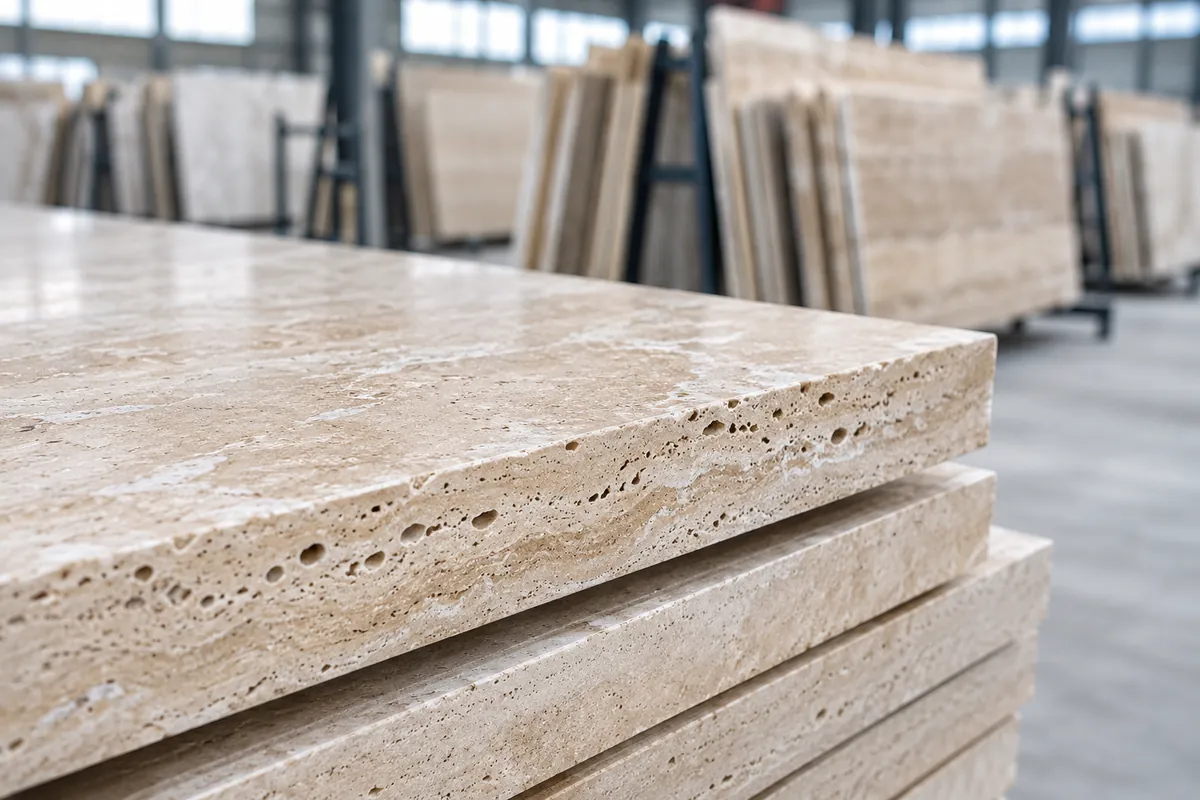
For marble and travertine, record stone type, thickness, finish and slab or cut-piece format. For aluminium profiles, compare alloy and surface treatment; for doors and sanitaryware, check the included fittings.
Sanitaryware offers also need the same mounting arrangement and dimensions. A basin quoted without taps or fixing hardware is not equivalent to a package that includes them.
Put quantities and packing into the same comparison sheet
Suppliers may quote per square metre, piece, tonne or linear metre, so compare totals only when dimensions match. For boxed tiles, record coverage per carton rather than treating a carton as a standard area.

Ask whether pallets, crates, separators and charges are included, especially for fragile glass, stone and tiles.
| What to compare | Why it matters |
|---|---|
| Product description and grade | Separates different specifications or quality levels |
| Dimensions and finish | Reveals differences hidden by a common product name |
| Quantity and unit | Makes totals comparable across m², pieces, tonnes or linear metres |
| Shade and batch reference | Helps match visible finishes across a project |
| Packing method and charges | Shows what arrives protected and what costs extra |
| Test documents and certificates | Identifies evidence required for the destination |
| Delivery term and named place | Shows which transport responsibilities the price includes |
| Availability and supplier-stated lead time | Distinguishes ready stock from production to order |
| Offer validity and payment terms | Identifies conditions that can change the commercial decision |
Approve samples and batches before ordering visible finishes
A tile sample may not match the shipment. Shade identifies a colour grouping; calibre identifies the manufacturer’s dimensional grouping.
For Turkish building materials installed across phases, record batch identifiers and an agreed reference sample or approval panel. Establish how later deliveries will be compared.
For projects with phased installation, ask whether the proposed stock covers the whole scheduled requirement. If later production is expected, agree what variation in appearance or dimensions the buyer will accept.
Natural stone varies in veining and colour. Ask for representative slabs or an agreed approval range.
Ask for destination documents before treating offers as equivalent
“Export quality” does not establish compliance. Request relevant test reports, declarations and product identification, then confirm destination requirements with your technical adviser.
For EU-bound construction products, CE marking and declarations depend on the product and applicable rules; do not assume every catalogue item requires the same documents.
Compare delivery terms using the same named place
ICC Incoterms rules allocate delivery tasks, costs and risks. Record the term and named place, then identify transport costs excluded from each offer.
For Turkish building materials such as stone, glass or tile, clarify packing, loading and handover. Bulk cement and steel require a different logistics assessment.
See Incoterms with Turkish suppliers for delivery responsibilities. Keep excluded transport costs visible.
Confirm what the supplier has committed and what still needs an answer
Record quotation validity, currency, payment terms, availability and supplier-stated lead time, marking anything unconfirmed. Ask whether the stated lead time runs to factory readiness, dispatch or arrival, since those dates answer different planning questions.
Flag missing fittings, packing charges, batch details or documents, and ask suppliers to clarify the disputed line. Compare payment conditions as quoted without assuming one arrangement is universally preferable.
If you have not requested offers yet, use our manufacturing RFQ guide to prepare a common brief. To compare supplier quotes already received, preserve each original response alongside your comparison sheet.
How Ardimex can help
We contact manufacturers and record their replies and open questions through our building materials supplier search. For a US tempered-glass enquiry, we called factories between Istanbul and Bursa, checked prices and availability, reported the findings and arranged shortlisted meetings and interpreting.
Frequently asked questions
What building materials does Turkey export?
Turkey exports ceramic tiles, sanitaryware, glass, natural stone and metal construction materials. Finished surfaces and bulk supplies require different comparison criteria.
How do I compare quotes from building material suppliers?
Match specifications, units, packing, delivery basis and required documents. Clarify missing fields before comparing totals.
What do shade and calibre mean for ceramic tiles?
Shade groups colour and calibre groups dimensions. Record both for tiles intended to match across an installation.
Do Turkish building materials have CE marking?
CE marking requirements depend on the construction product and applicable EU rules. Check the individual product, not the entire catalogue.
What should a building materials quotation include?
It should identify product, grade, quantity, unit, packing, delivery basis and place, supplier-stated lead time, validity and payment conditions. Note supporting documents and exclusions.
How can I make sure a reorder matches the first batch?
Keep approved samples, finish details and batch references. Ask the manufacturer what can be matched before reordering.